Why Are There Two Manchester Teams?
Manchester has two Premier League teams because two separate clubs formed in the east of the city in 1878 and 1880 and neither ever merged into the other. This page explains why there are two Manchester teams, where each one began, why United moved to Old Trafford and City stayed in the east, and which ground to visit.
Quick answer
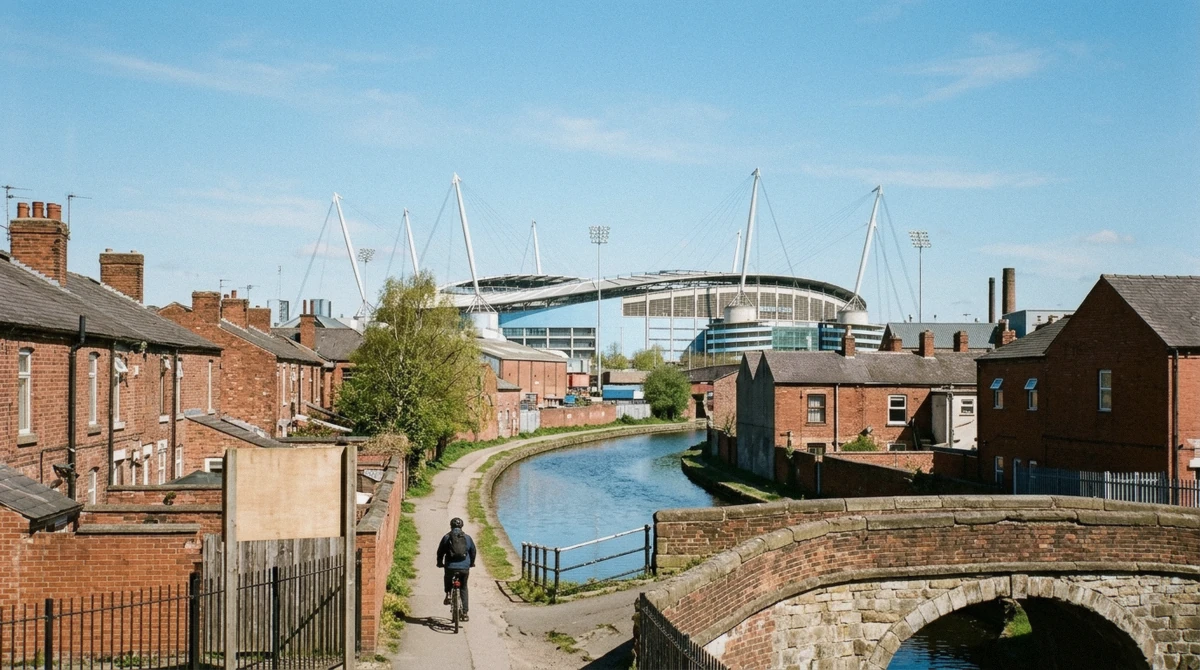
Manchester has two Premier League clubs because two separate teams were formed in the east of the city in the 1870s and 1880s, a railway works side in 1878 and a church side in 1880, and both grew into professional clubs. Newton Heath became Manchester United in 1902 and moved to Old Trafford in 1910. St Mark's (West Gorton) became Manchester City in 1894 and stayed in the east, now at the Etihad.
Key takeaways
- Manchester United began in 1878 as Newton Heath L&YR, the works team of a railway depot, and took its name in 1902
- Manchester City began in 1880 as St Mark's (West Gorton), became Ardwick in 1887 and Manchester City on 16 April 1894
- The two first met on 12 November 1881, years before either club had its current name
- United moved to Old Trafford in 1910, City stayed in the east and has played at the Etihad Stadium since 2003
- The grounds are about 6.5km apart, both on the tram, so the Etihad tour and Old Trafford fit one trip
See City's Home From the Inside
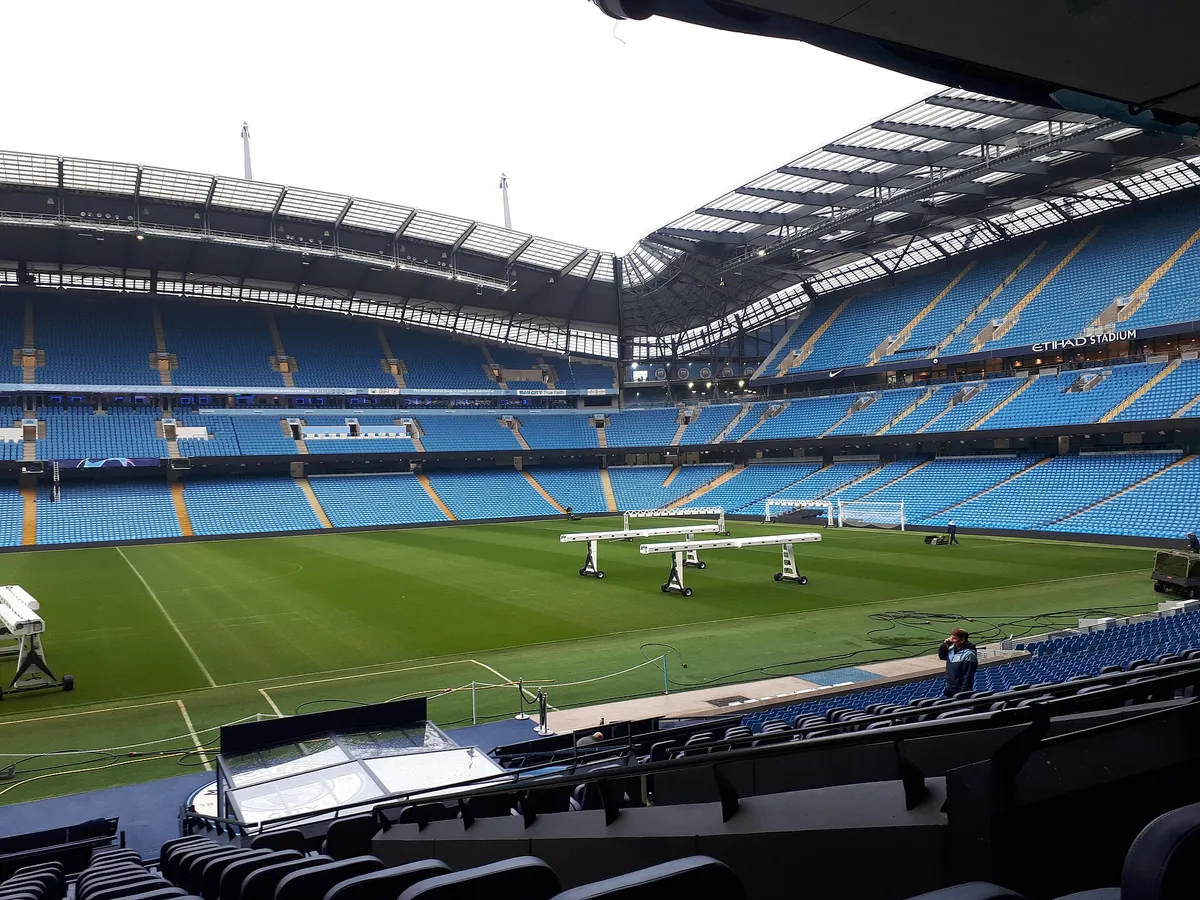
If the question has made you curious about the east Manchester half of the story, the club's own ground is the place to see it. This behind-the-scenes route covers the home dressing room, the glass players tunnel and pitchside at the Etihad.
 from $42.61
Etihad Stadium Behind-the-Scenes Tour
A 75-minute guided route through normally restricted areas of Etihad Stadium, typically including the press room, home dressing room, glass players tunnel, dugouts, and pitchside. The route can…
- Interactive virtual press-conference feature
- Immersive home dressing-room presentation
- Walk through the glass players tunnel
- Pitchside view from the dugouts
Why does Manchester have two football teams?
Manchester has two football teams because two separate sides were founded in different parts of the city, a decade apart, and neither ever merged into the other. In the late nineteenth century football clubs grew out of churches, factories and railway depots, and an industrial city of that size produced several. Two survived and turned professional.
The first was Newton Heath L&YR, formed in 1878 by the carriage and wagon department of the Lancashire and Yorkshire Railway depot at Newton Heath. The second was St Mark's (West Gorton), started in 1880 as a church side. Both grew up in the working-class east of Manchester and drew from the same pool of players and spectators.
There was never a plan for two big clubs. The Football League needed teams in big cities, both clubs were good enough to join, and by the time anyone asked whether one city could support two, both had thousands of loyal supporters.
If you want the one-sentence version for a pub quiz: Manchester has two teams for the same reason most big English cities of that era had several, and Manchester is simply the place where both of them stayed at the top.
Source: Manchester United, club history, Manchester City, club history.
Where did Manchester United and Manchester City each start?
This table follows each club from its founding to its current ground, with the name changes and the move dates, from the two clubs' own histories. Capacities are the Premier League's 2026/27 figures.
| Step | Manchester United | Manchester City |
|---|---|---|
| Founded | 1878, as Newton Heath L&YR, the railway depot works team | 1880, as St Mark's (West Gorton), a church side |
| Renamed | Manchester United in 1902, after a winding-up order and a rescue by local businessmen | Ardwick AFC in 1887, then Manchester City on 16 April 1894 |
| Old ground | Bank Street, Clayton, 1893 to 1910 | Hyde Road, until the main stand burned down in 1920 |
| Moved to | Old Trafford, 19 February 1910 | Maine Road, Moss Side, 1923 |
| Current ground | Old Trafford (74,158 for 2026/27) | Etihad Stadium, home since 2003 (61,038 for 2026/27) |
Neither club started where it plays now. Newton Heath was a Clayton side that moved west to Old Trafford in 1910. City started in West Gorton, moved around the east of the city and only left it for Moss Side in 1923.
The Etihad sits back in east Manchester, a mile or so from where Ardwick played, so City ended up close to home.
Source: Manchester United, club history, Manchester City, club history, Manchester City, Maine Road eras, Premier League, the 20 Premier League stadiums.
Why did United move west to Old Trafford while City stayed east?
United moved west after a near collapse. In 1902 the club faced a winding-up order and was rescued by local businessmen, led by John Henry Davies. The new Old Trafford stadium opened on 19 February 1910, and United have played there ever since.
City's move was driven by something simpler: a fire. The main stand at Hyde Road was destroyed in 1920, and in 1923 the club opened Maine Road in Moss Side. It was built big, for about 85,000. On 3 March 1934 an FA Cup tie against Stoke drew 84,569, still the biggest crowd for a competitive match at an English club ground.
The result was a split of geography that outlasts the clubs' fortunes. United's later support grew up on the western and wealthier side of the conurbation. City remained rooted in the east, and in 2003 it moved to the former Commonwealth Games stadium in Eastlands, which is the Etihad today. People in Manchester still use that east and west map as a quick guide to who supports whom, though it is a rough one, since families and neighbourhoods split down the middle.
Source: Manchester United, club history, Manchester City, Maine Road eras, Manchester City, Record Crowd. Still..
Did Manchester United and City ever share a ground?
Yes. After German bombing wrecked Old Trafford in 1940 and 1941, Manchester United played its home games at City's Maine Road through the late 1940s, until Old Trafford was rebuilt. The two clubs shared a pitch for years while the bitter rivalry was already running.
The link goes deeper than the ground. Matt Busby, who took over as United manager in 1945 and built the Busby Babes, had been a City player. The sharing story is the best single answer to anyone who thinks the two clubs live in separate worlds. They grew up together, played in the same stadium and shared a manager's career before they split into the two global brands of today.
For a visitor, the Maine Road era is also part of the Etihad's own tour story. The new Manchester City Museum Experience at Medlock Square, beside the stadium, recreates Moss Side and Maine Road, the club's home from 1923 to 2003, and lets visitors pose with the club's trophies. It takes visitors from 14 December 2026 and is booked separately from the stadium tour.
Source: Manchester City, museum announcement, Medlock Square, new immersive museum experience.
Are Manchester United and Manchester City rivals?
This table gives the meetings between the two clubs that people bring up most, from the first friendly to the first FA Cup final between them.
| Measure | Figure |
|---|---|
| First meeting | 12 November 1881, Newton Heath against St Mark's (West Gorton), a friendly |
| First FA Cup final between them | 2-1 to City at Wembley in June 2023, Ilkay Gundogan scoring in the first minute |
Yes, they are rivals, and the rivalry is one of the oldest in English football. The first game was a friendly in 1881, years before either club had its current name. For decades City was the poorer relation, and then the balance swung. Since 2012 City has won far more of the trophies, and the old jokes between the two sets of fans have swapped sides.
It is a local rivalry with a global audience. Both clubs have supporters in the same streets and often the same families, which keeps the derby personal. Both have also won the continental treble of league, FA Cup and European Cup, United in 1998-99 and City in 2022-23.
Source: Manchester United, club history, Manchester City, FA Cup history.
What is the difference between Manchester United and Manchester City?
This table sets the two clubs side by side on the facts a visitor can check: where they began, where they play, their first league title and their treble seasons.
| Fact | Manchester United | Manchester City |
|---|---|---|
| Ground | Old Trafford, south-west of the centre | Etihad Stadium, east of the centre |
| Ground opened | 1910 | 2002, for football in 2003 |
| Capacity, 2026/27 | 74,158 | 61,038 |
| First league title | 1908 | 1937 |
| Continental treble | 1998-99 | 2022-23 |
The difference that matters on a visit is the ground. Old Trafford is the older, larger and more famous stadium, with a three-level museum that is the main attraction there. The Etihad is the modern ground, built for the 2002 Commonwealth Games and converted for City in 2003, with a tour that goes behind the scenes through the dressing room and the glass players tunnel.
The fans differ more in reputation than in reality. Supporters of each club like to say the other is living in the past. Neither version is the whole story, and you will find both colours in every pub in the city.
Source: Manchester United, club history, Manchester City, club history, Premier League, the 20 Premier League stadiums.
Which Manchester team is better?
United has the longer list of old honours and City has the more recent run of trophies, so the answer depends on the decade you pick. United has won 20 English league titles, the first in 1908, and the European Cup in 1968, the first English club to do so. It won the Premier League, the FA Cup and the Champions League in 1998-99.
City won its first league title in 1937 and then waited until 1968 for the next one. It won the Premier League in 2012 on goal difference with a 94th-minute goal on the last day against QPR, which is why that match is still so famous. In 2022-23 it won the Premier League, the FA Cup and the Champions League in one season.
For a visitor the useful answer is different. Neither club is better to tour. They offer different things, and the right one for you is the one that matches how you like to spend an hour or two. A museum that walks you through history favours Old Trafford, and a stadium route with a modern tunnel and dressing room favours the Etihad. If you want both, the Etihad against Old Trafford comparison works out how to do them in a day.
Source: Manchester United, club history, Premier League, 2011/12 season review.
Which Manchester stadium should a visitor see first?
Visit the one that matches your reason for coming, and book it around the fixture list, because neither club runs its regular tour on its own home match day. The Manchester City stadium tour is the shorter and more modern of the two. The guided route runs 75 minutes and passes the home dressing room, the glass players tunnel and the dugouts. It is rated 4.8 from 3,317 reviews, and adult tickets on the club's own site run from about £28 to £32 depending on the date.
Getting there is easy. The Etihad Campus tram stop is about 250 metres from the ground, a five-minute walk, and the ride from Piccadilly takes about ten minutes. Our guide to getting to the Etihad has the fares and the park-and-ride options. If you are travelling with children, read the kids guide to the Etihad tour before you pick a slot.
One thing that surprises first-time visitors: the grounds are 6.5km apart on opposite sides of the city, so the two cannot be done on foot. The tram between them runs through the city centre.
Two Manchester Teams: Frequently Asked Questions
Are there two football teams in Manchester?
Yes, two Premier League clubs: Manchester United at Old Trafford and Manchester City at the Etihad Stadium. Both are in the Greater Manchester area and both have been playing since the late 1800s.
Which is the older club, United or City?
United, by two years. It was formed in 1878 as Newton Heath L&YR, while City began in 1880 as St Mark's (West Gorton).
When did Manchester City get its name?
On 16 April 1894. The club had been St Mark's (West Gorton) from 1880 and Ardwick AFC from 1887.
Where is the Manchester City stadium?
The Etihad Stadium is on Joe Mercer Way in east Manchester, about 2.2km from Piccadilly station. The Etihad Campus tram stop is roughly five minutes on foot. See the getting there guide.
Can you tour the Etihad Stadium?
Yes. The behind-the-scenes route runs 75 minutes and takes in the home dressing room, the players tunnel and pitchside, and it does not run on home match days. Check dates and the current price.
Did the two clubs ever play in the same stadium?
Yes. After Old Trafford was bombed in the Second World War, United played at City's Maine Road through the late 1940s.
Is Old Trafford bigger than the Etihad?
Yes. The Premier League gives Old Trafford 74,158 seats and the Etihad 61,038 for 2026/27, after the Etihad's North Stand expansion.